Complete Guide to Egg Substitutes for Baking
Baking without eggs can produce amazing results that taste just like classic recipes. I have included a breakdown of the best egg substitutes for each type of baked good. After testing dozens of eggless recipes over the years, I’ve learned that using the same substitute in every recipe is one of the biggest mistakes people make. There isn’t a great one perfect replacement that works for everything. The ingredients that create a soft, fluffy cake may not give you the chewy cookies or fudgy brownies you’re hoping for.
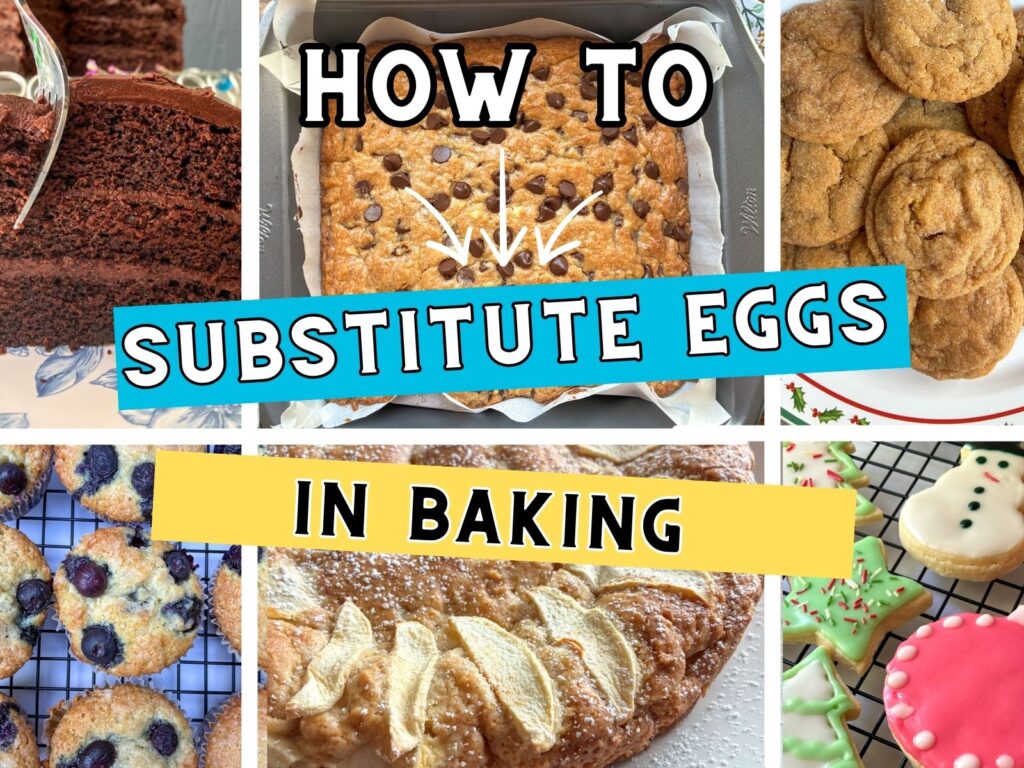
To get the best results, you need to think about what the eggs are actually doing in each recipe. They add moisture, provide structure, help bind ingredients together, and create lift. Since every recipe relies on eggs a little differently, the best substitute depends on the texture and final result you’re trying to achieve. That’s why I always recommend choosing an egg replacement based on the type of dessert you’re making rather than reaching for the same substitute every time.
Over the years, I’ve tested countless eggless recipes and learned that a few simple pantry staples can consistently deliver incredible results. Whether you’re baking eggless cakes, eggless cookies, eggless brownies, or eggless muffins this guide will help you choose the right substitute.
You’ll have baked goods turn out soft, flavorful, and delicious every time. Because no one wants to waste time or money on something that doesn’t work!
Quick Answer
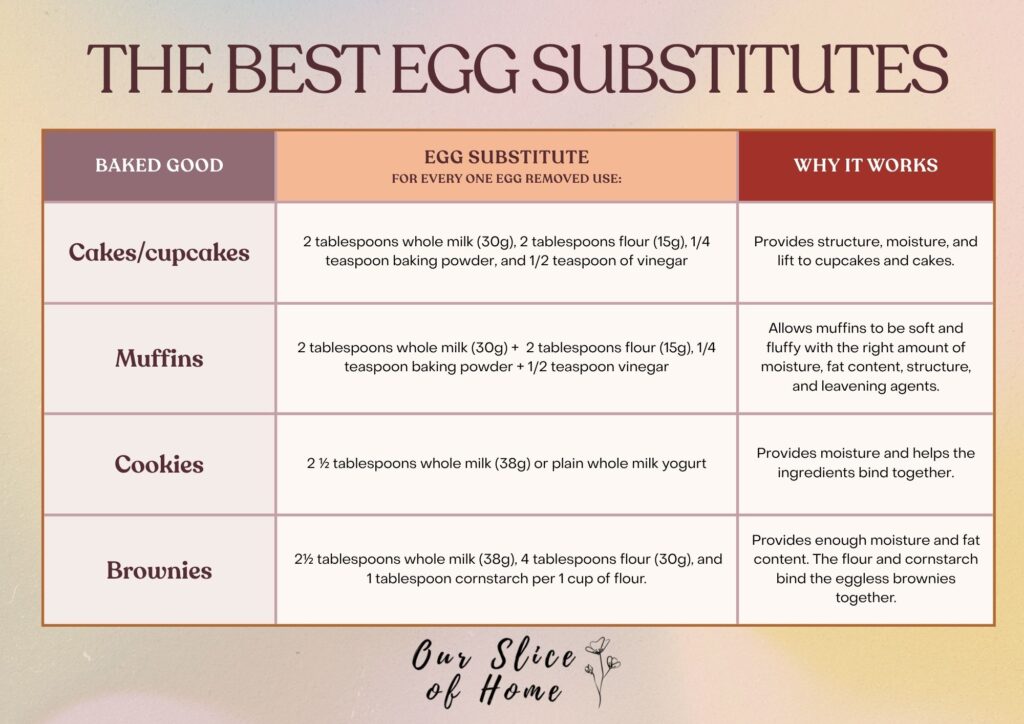
The best egg substitute depends on what you’re baking. I explain more below, but for the super-fast answer, see this graph:
What do eggs do in baking?
Eggs play several important roles in baking:
1. Lift
2. Moisture
3. Structure
Lift: Yes, eggs act as a leavening agent! As eggs heat up in the oven, the water inside them turns to steam. That steam helps baked goods rise. This is why you’ll see extra leavening agents in my egg substitutes including baking powder and baking soda. Don’t forget the vinegar which activates the baking soda so it works properly!
Moisture: Eggs add moisture and richness, keeping baked goods soft instead of dry and crumbly. This is why you’ll see whole milk listed as a common substitute. This provides great moisture. I personally prefer whole milk for the extra fat content, but 2% works as well as dairy-free options (soy, almond, oat milk).
Structure: As eggs bake, their proteins firm up and help hold everything together. Without enough structure, cakes can collapse and cookies may spread too much. That’s why you’ll see some added flour in the egg substitutes to add more structure.
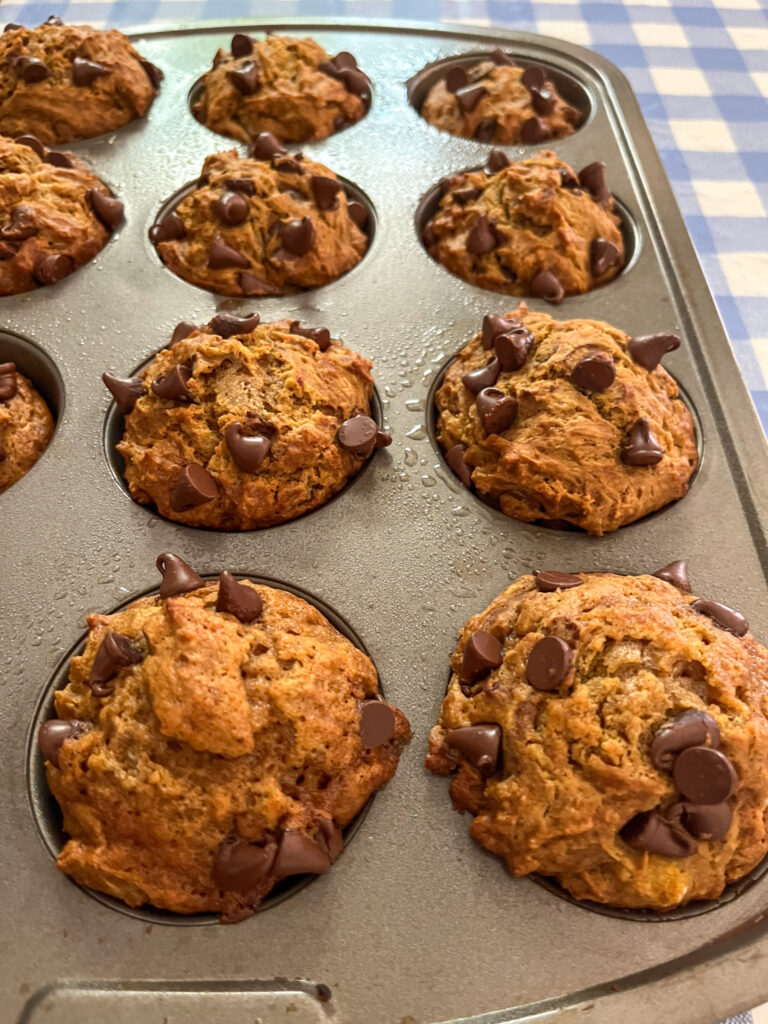
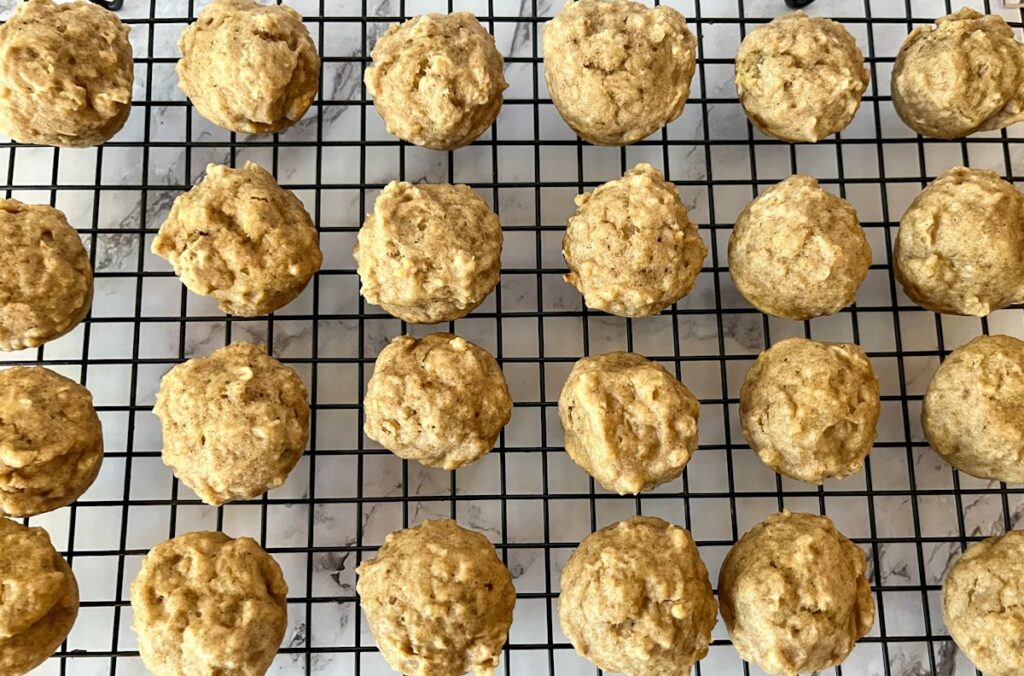
Best Egg Substitute for Baking Muffins
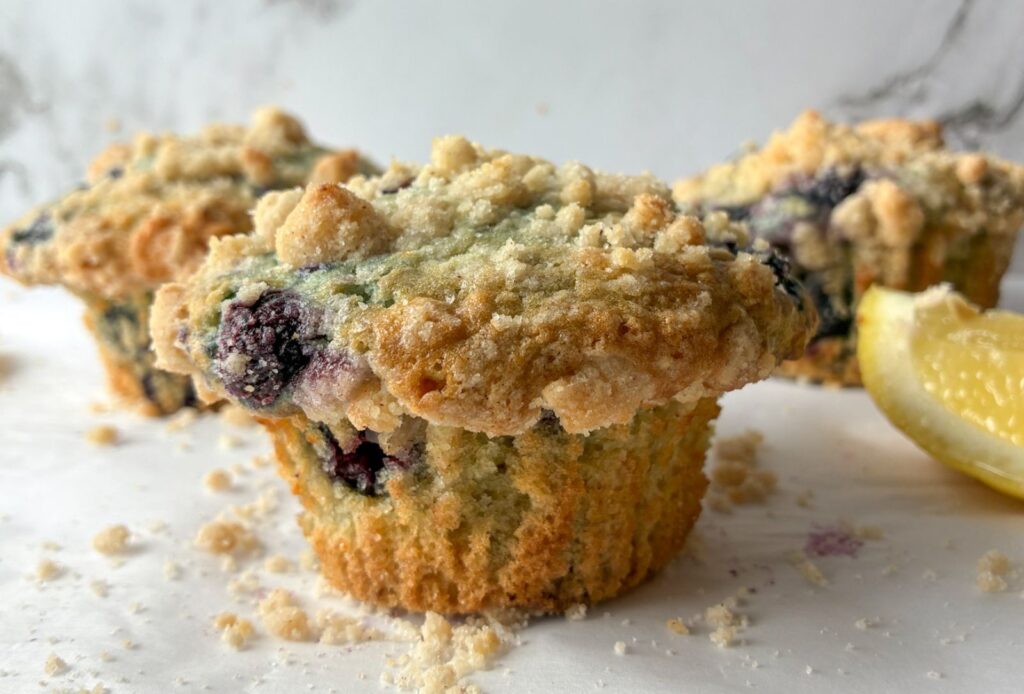
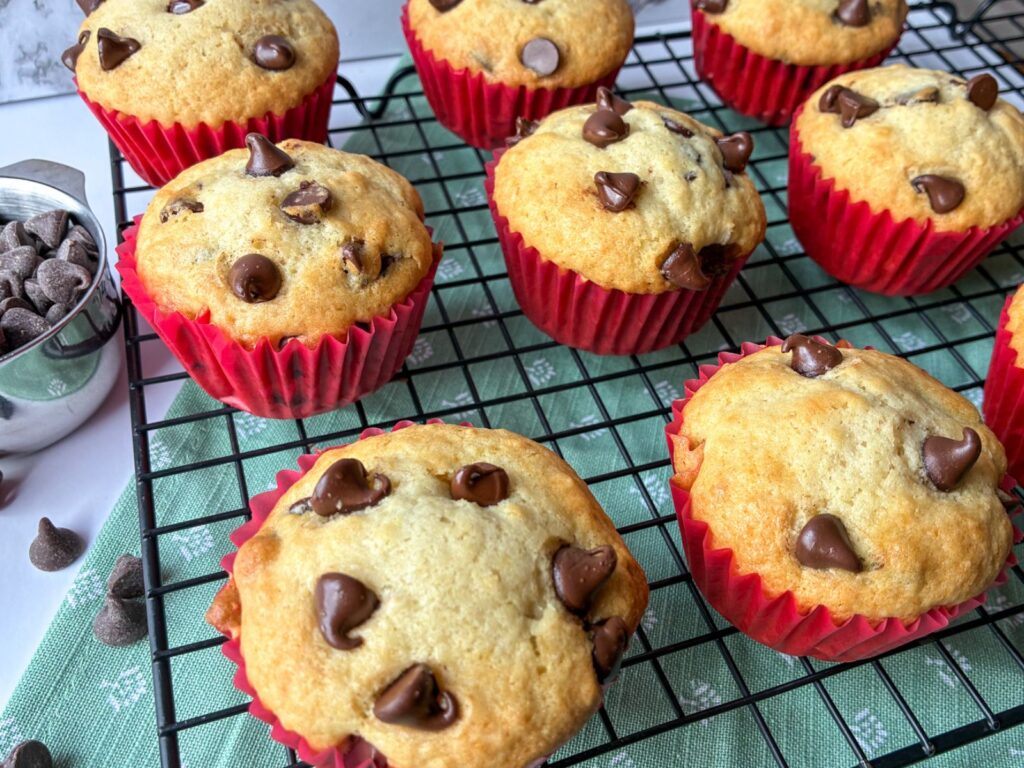
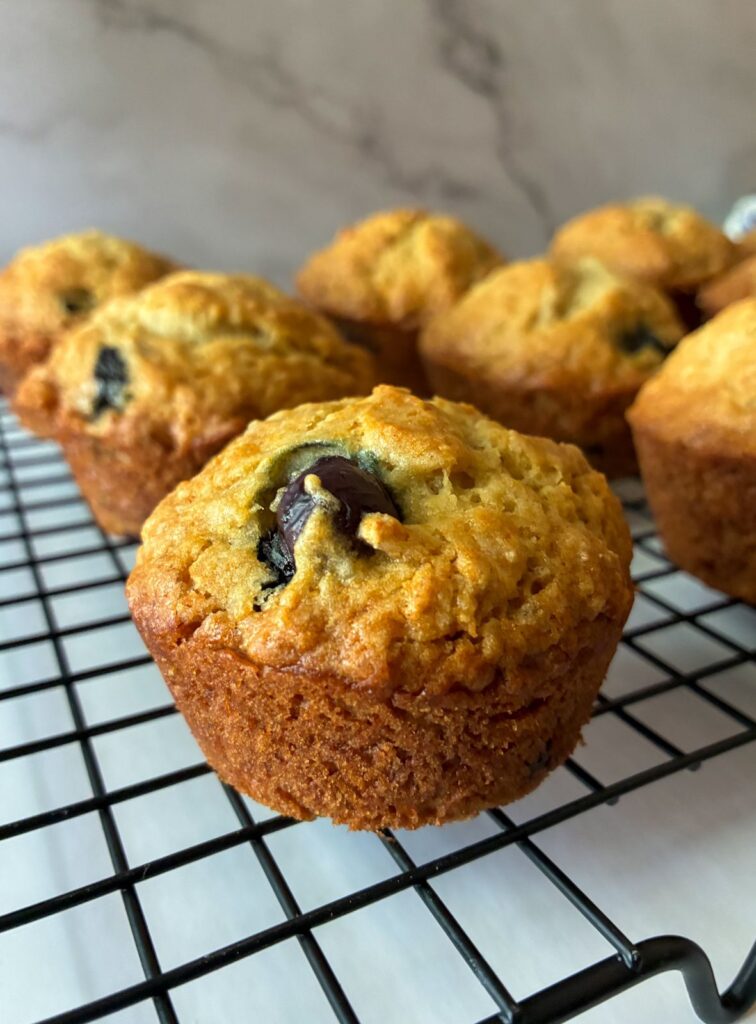
For soft, fluffy, eggless muffins, use 2 tablespoons whole milk (30g), 2 tablespoons of flour (15g), 1/4 teaspoon baking powder, 1/2 teaspoon vinegar (apple cider vinegar or white vinegar) for every one egg removed. Read my complete guide on egg substitutes in baking muffins!
This combination gives muffins the moisture, structure, and lift that eggs typically provide. The flour helps hold everything together, the milk keeps the muffins soft and moist, and the baking powder and vinegar react together to create a light, fluffy texture.

Best Egg Substitute for Cookies
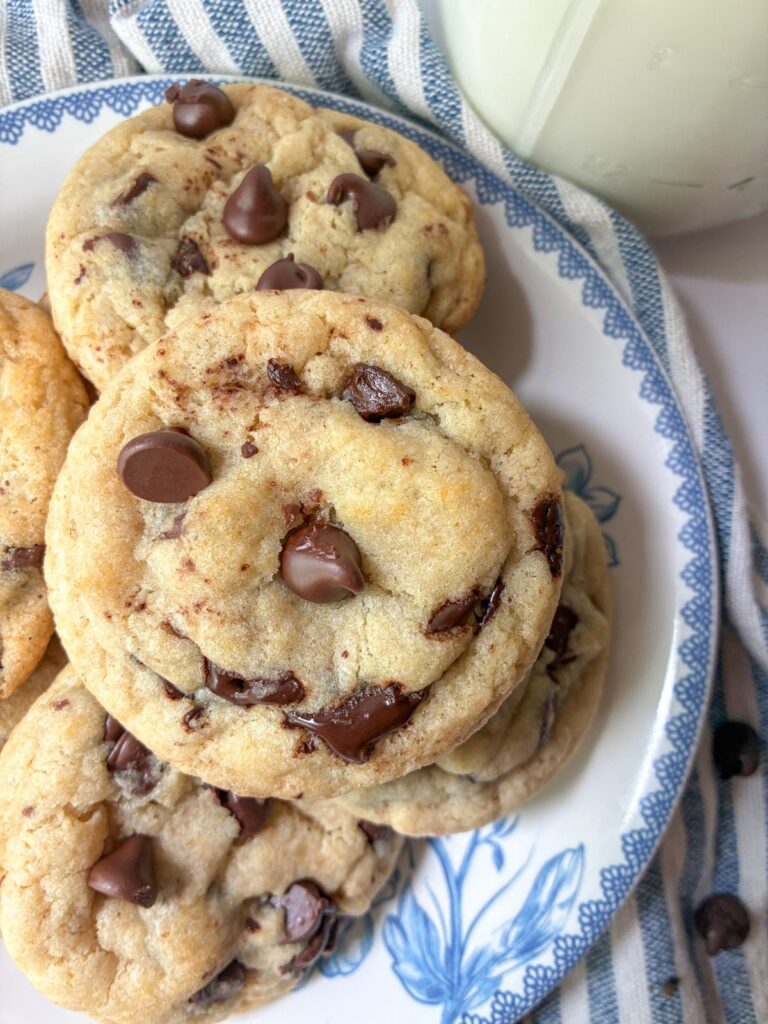
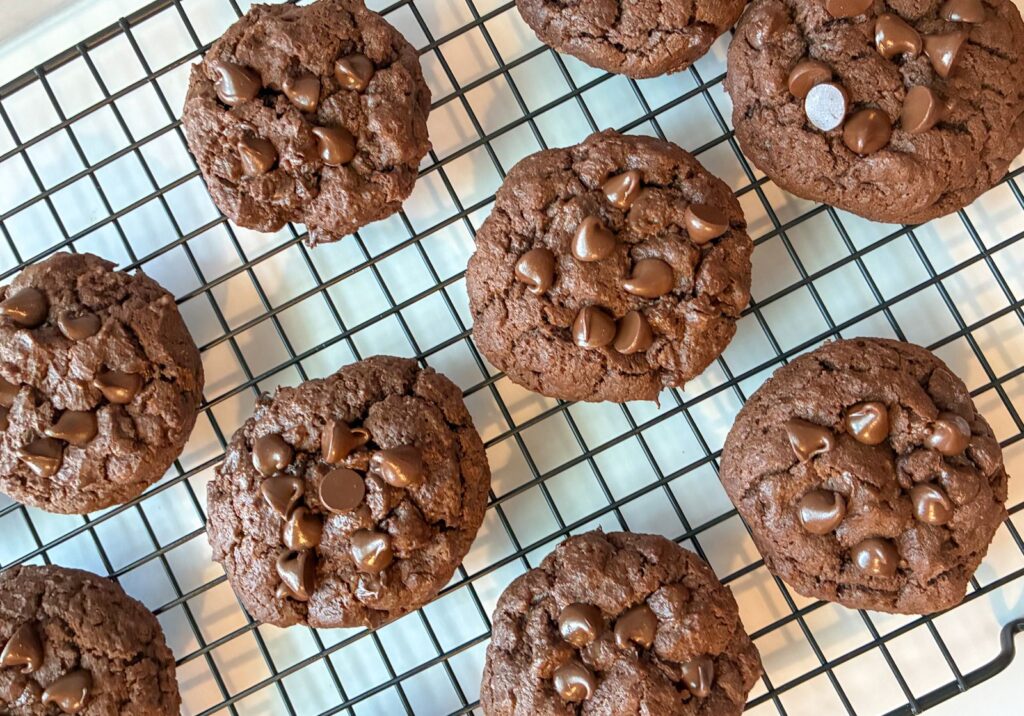
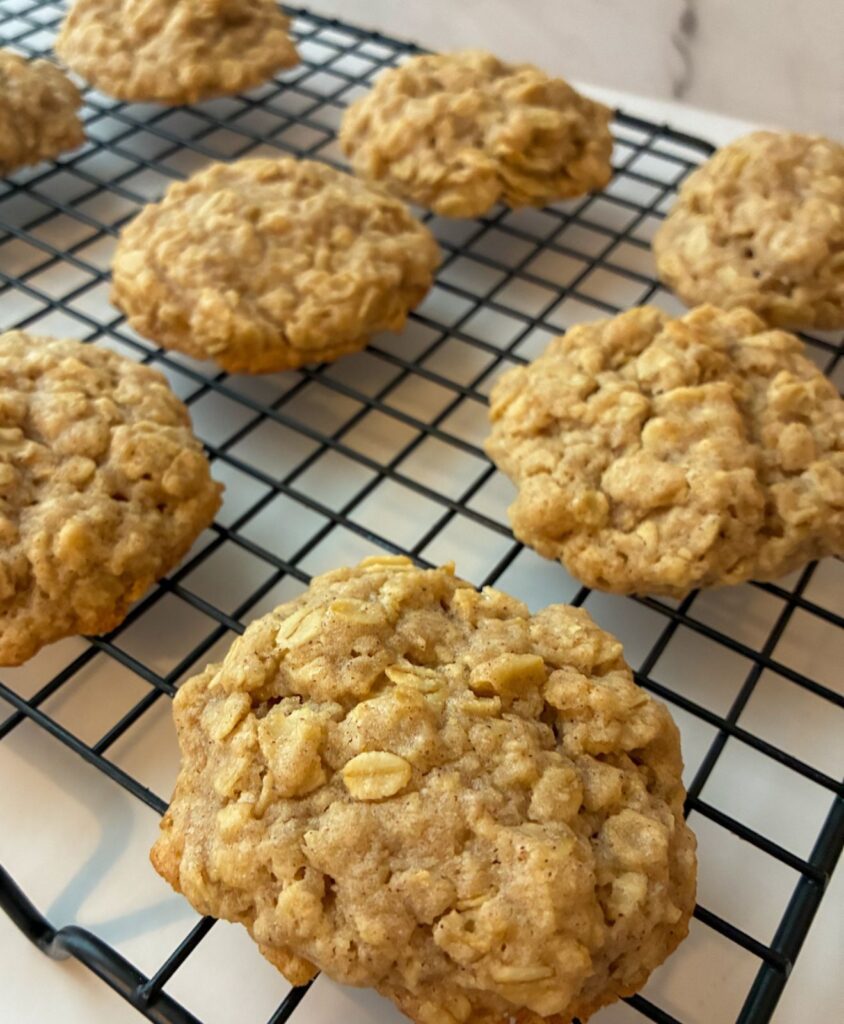
To make eggless cookies, I recommend for every egg removed, add 2 ½ tablespoons of whole milk (38g) or plain whole milk yogurt. You can also use plain whole milk yogurt. This adds the needed moisture and fat content to the cookies. It also allows the dried ingredients to bind together. Read more on my post for best egg substitutes for cookies!
Cut-out sugar cookies
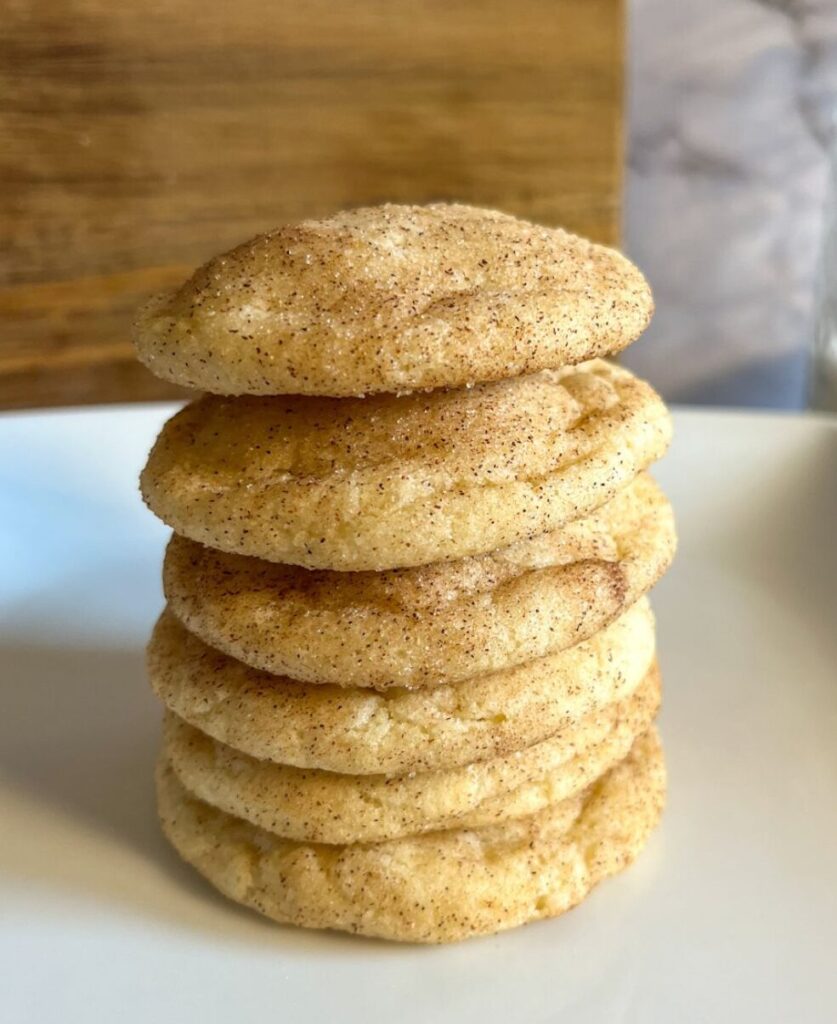
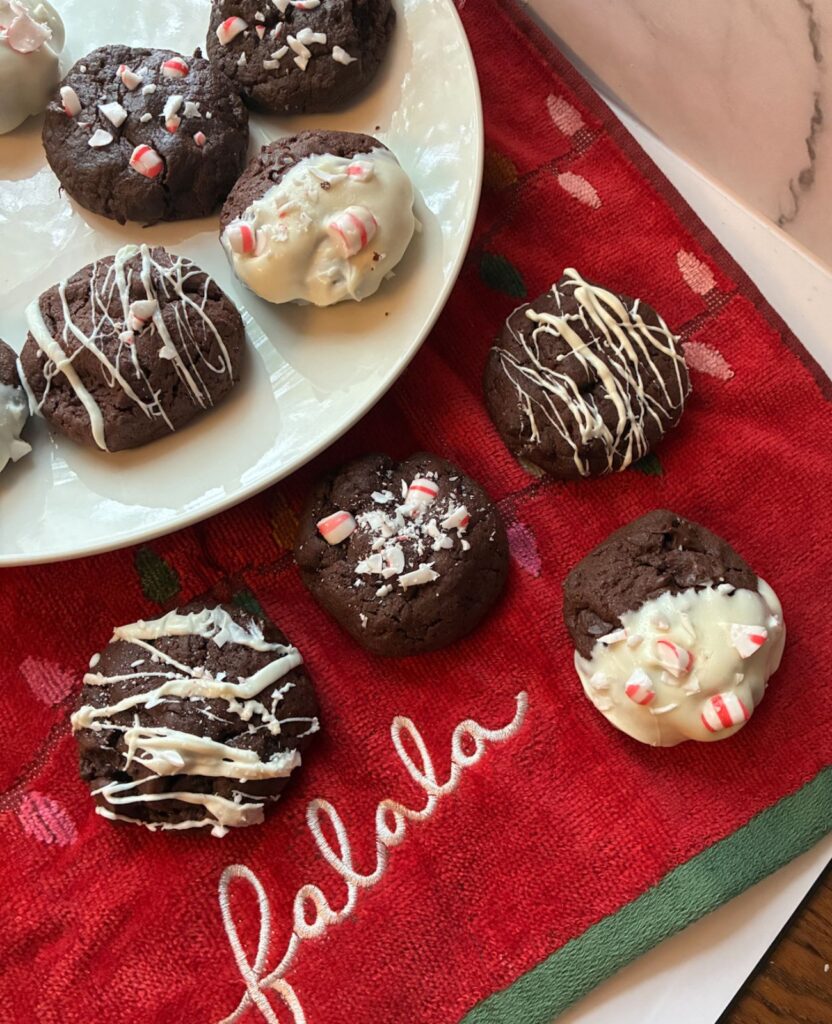
To make eggless cut-out sugar cookies that you decorate are a bit different as they need to hold their shape well. This is my tried-and-true eggless cut-out sugar cookie recipe!


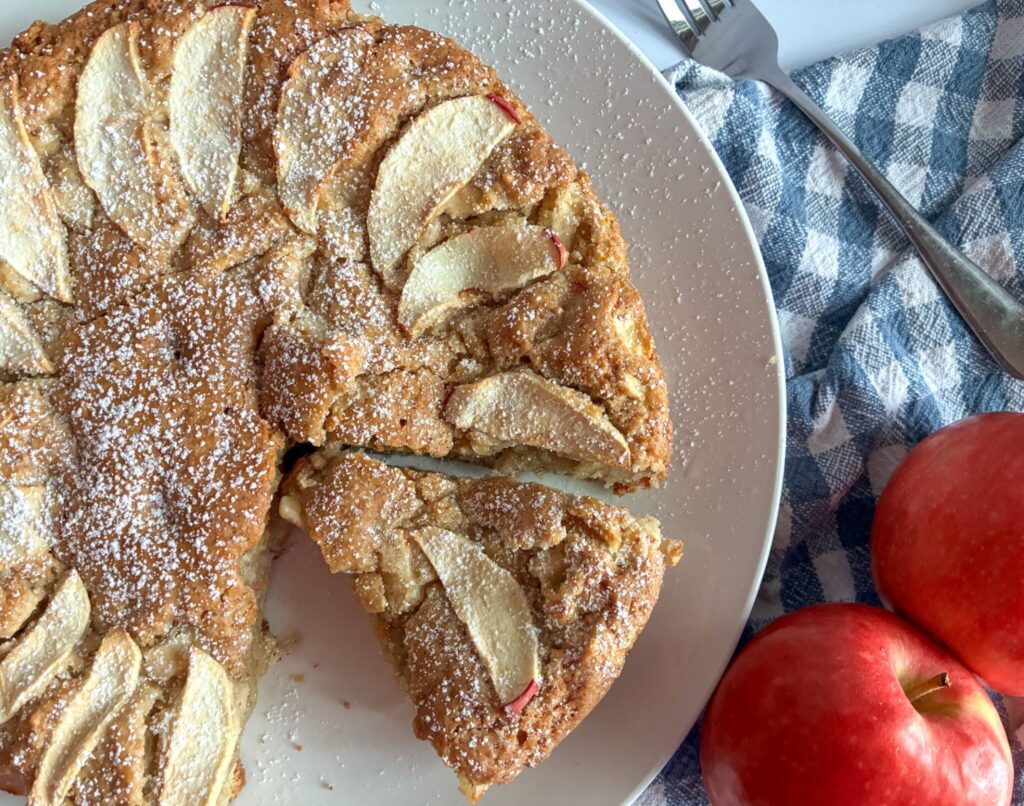
Best Egg Substitute for Cakes and Cupcakes
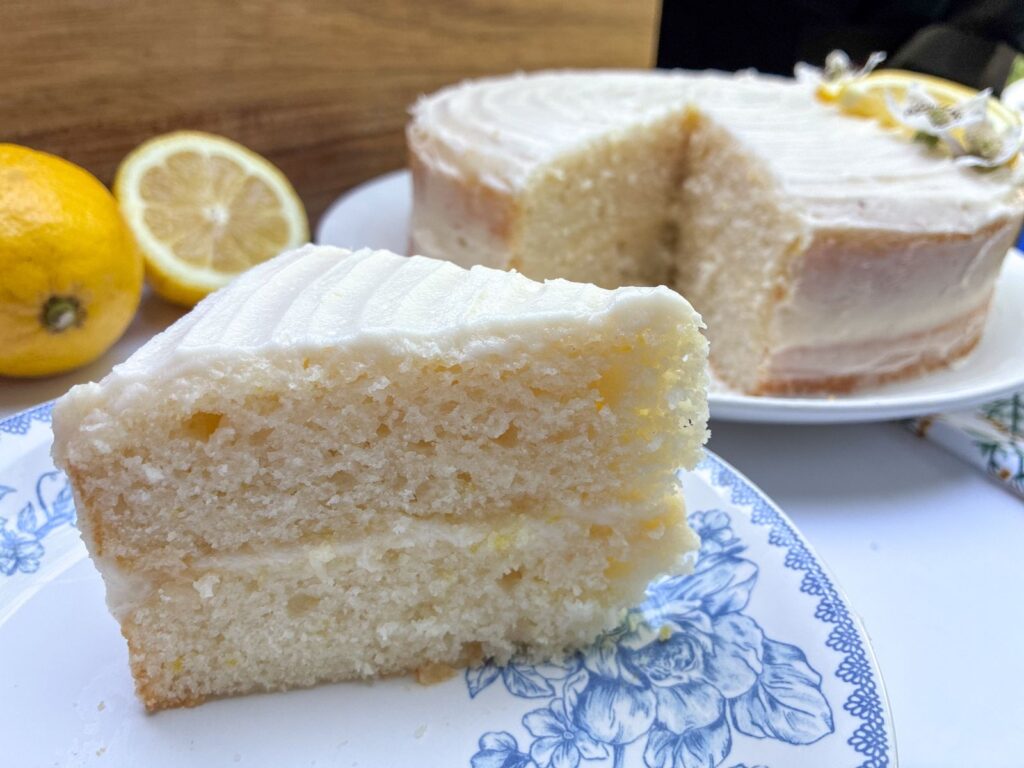
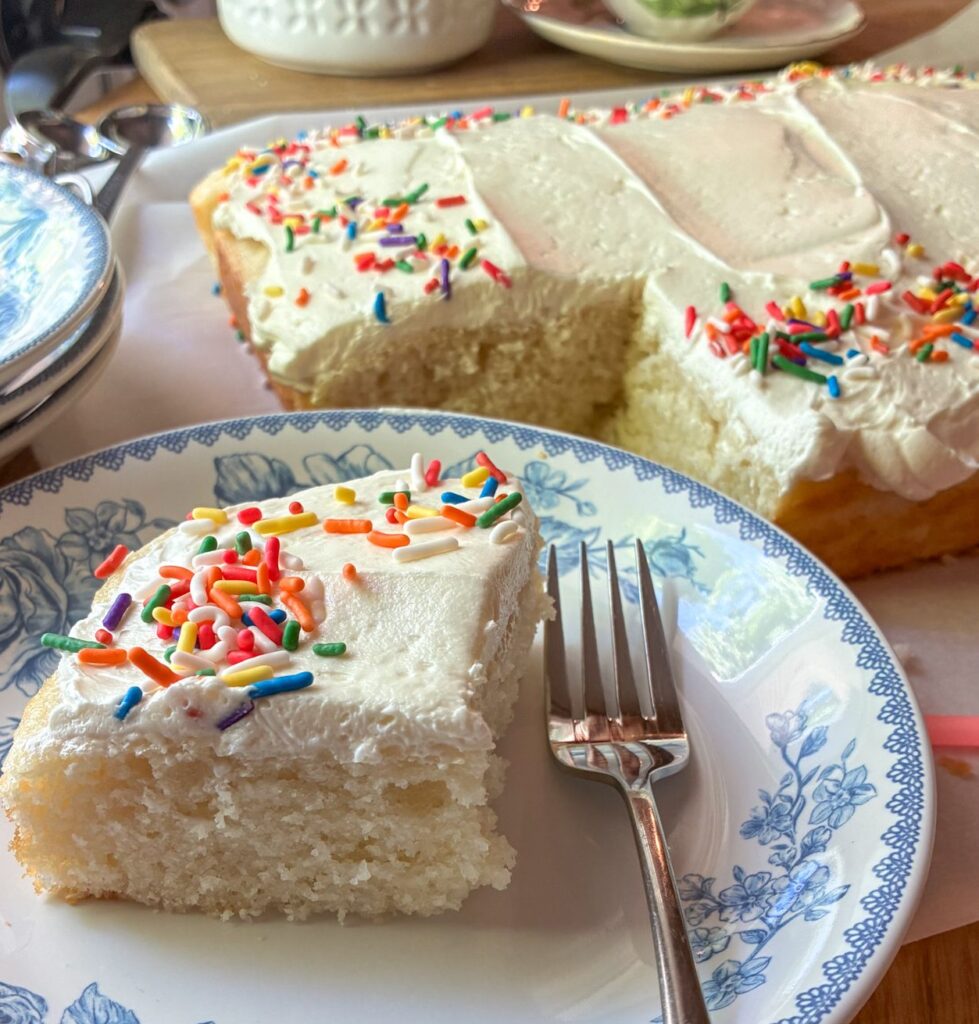
To produce soft, fluffy eggless cakes or cupcakes, for every egg removed, add 2 tablespoons of whole milk (30g), 2 tablespoons of flour (15g), 1/4 teaspoon of baking powder, and 1/2 teaspoon of vinegar (apple cider vinegar or white vinegar). This provides the right amount of moisture, leavening agents, and structure!
I wrote up a specific post more on this topic so jump over to read my full guide on substituting eggs in cakes and cupcakes.
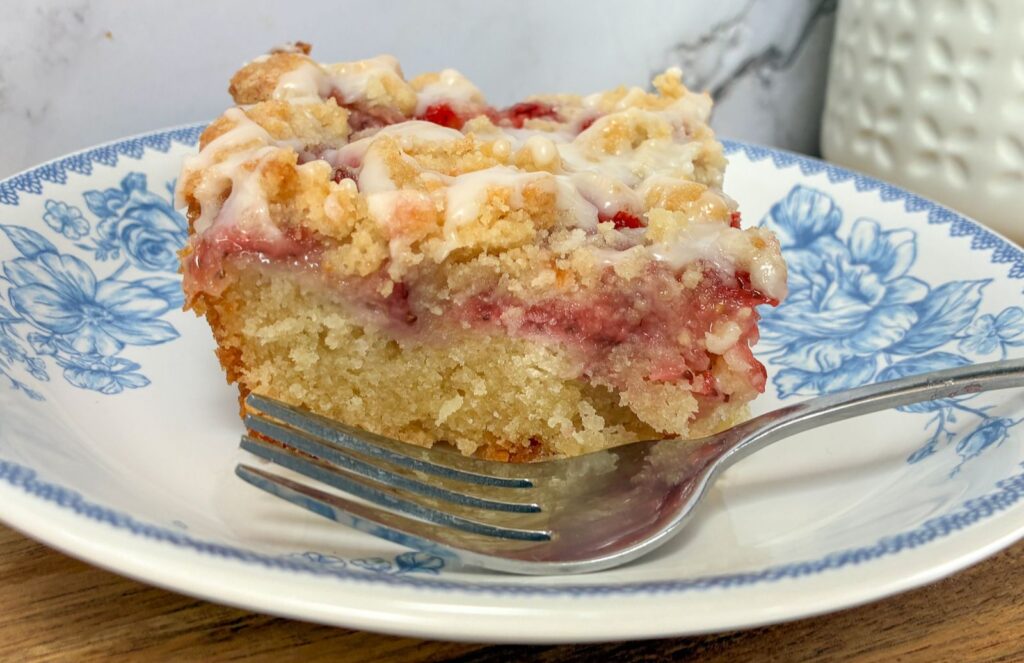


Best Egg Substitute for Brownies
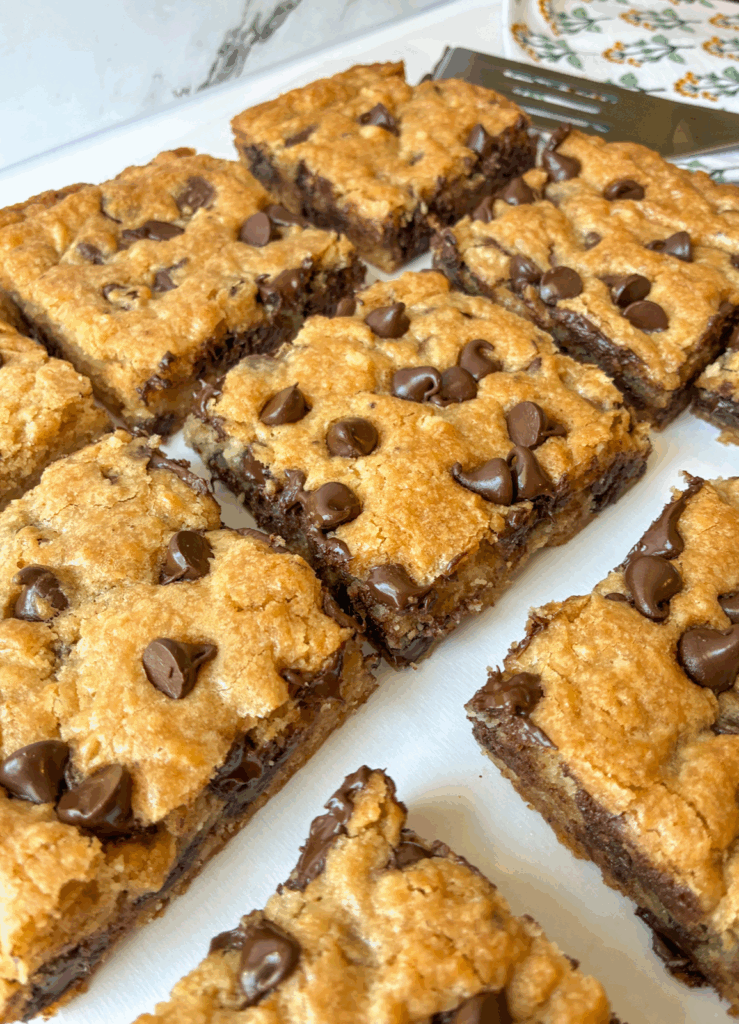
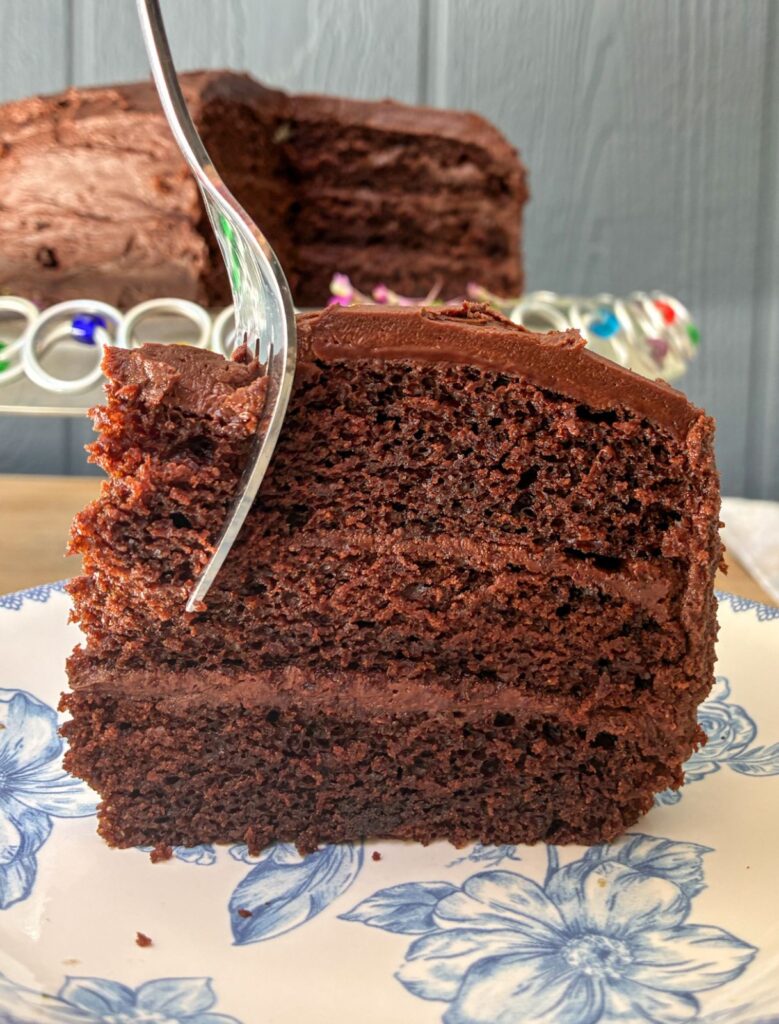
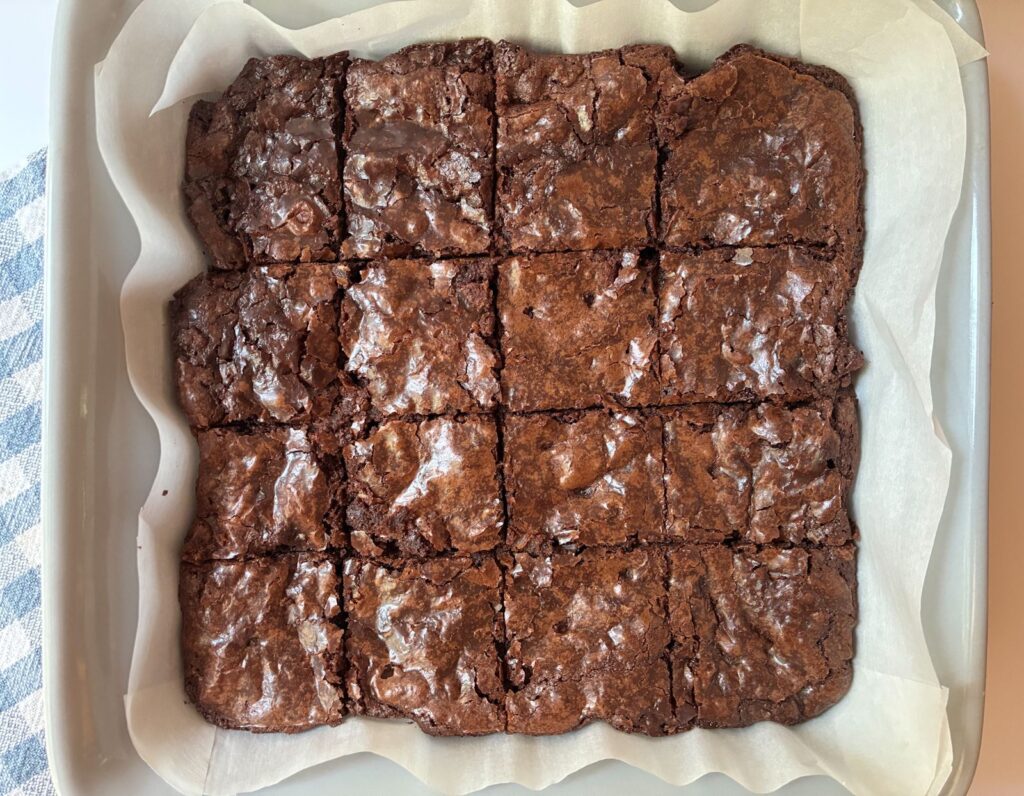
For rich, fudgy eggless brownies, I recommend for every egg removed, add 2½ tablespoons whole milk (38g), 4 tablespoons flour (30g), and 1 tablespoon cornstarch (per 1 cup of flour in the recipe).
This combination creates the chewy, dense texture that makes brownies so irresistible. The extra flour and cornstarch provide structure, while the milk adds the moisture that eggs would normally contribute.
FAQ
I typically don’t recommend commercial egg replacements as I don’t recommend a one size fits all approach. I don’t love the texture of the baked goods they produce, and I think are better options.
Yes, I recommend soy milk, almond milk, or oat milk.
I recommend these egg substitutes on a maximum of 3 eggs per recipe. If you are substituting a recipe you have on hand. If the recipe calls for more than 3 eggs, I recommend finding a recipe specially written as egg-free.
All-purpose flour. If the recipes calls for a different type of flour such as cake flour, then use the flour the recipe calls for.
The most common culprit is too much flour, so make sure you are measuring your flour correctly. (For the most accurate results, use a kitchen scale or spoon the flour into your measuring cup and level it off.)
Overmixing your batter can also lead to a dense texture. Once you add the flour, mix only until the ingredients are just combined.
Finally, check your baking powder and baking soda. Expired leaveners can lose their ability to create the lift needed for light, fluffy baked goods.
Common egg substitutes and why I don’t use them often
Applesauce: 1/4 cup applesauce per egg. I only recommend this for applesauce bread or muffins!
Pumpkin puree: 1/4 cup of pumpkin puree per egg. I only recommend in pumpkin flavored desserts.
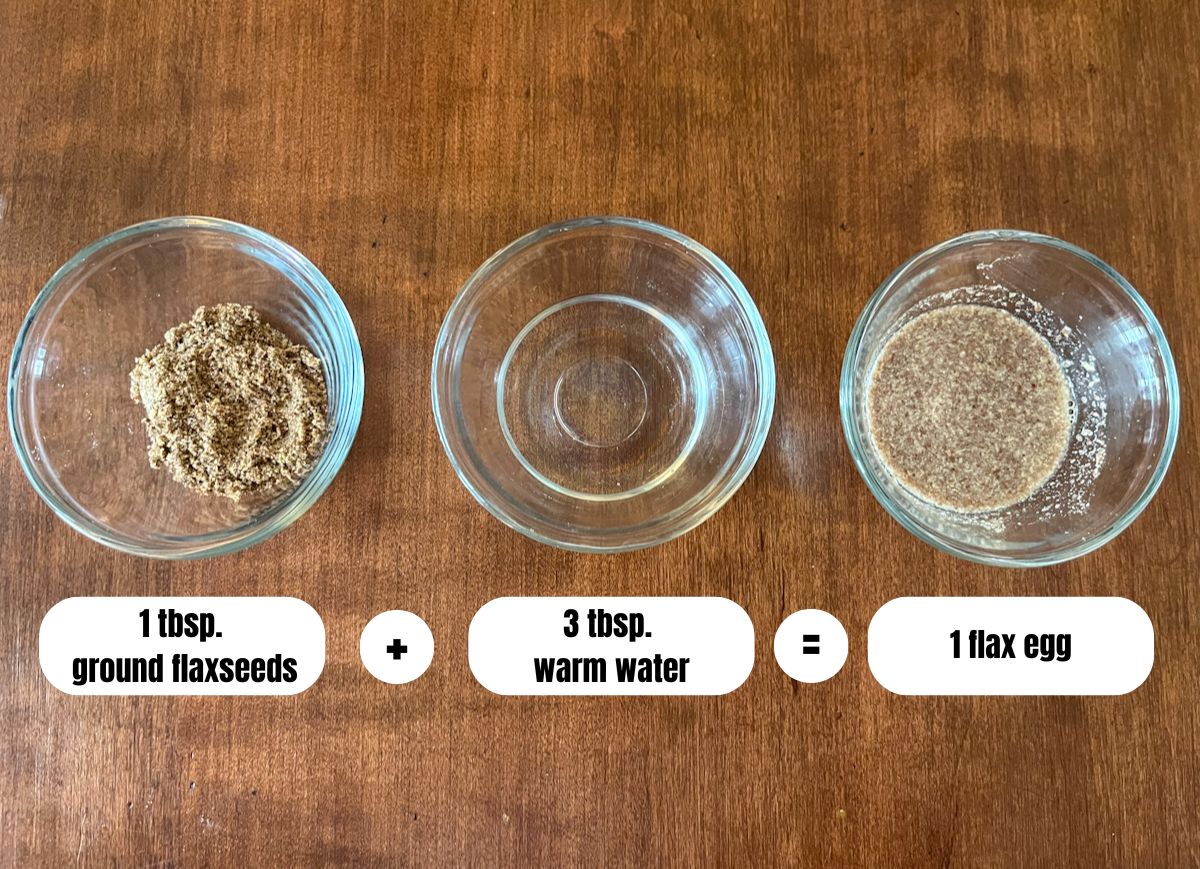
Chia egg or flax egg: These can work well for structure but will produce a nutty flavor and chewier texture.
Common eggless baking mistakes
- Not measuring the flour correctly: Spoon the flour into your measuring cup and level it off. I highly recommend using gram measurements for more accuracy!
- Not following temperature recommendations: If something is listed as room temperature or melted, that is vital to the success of the recipe.
- Using the same egg substitute for everything: Each baked good is so unique and really needs a unique egg replacement.